Skip to Content
Exit

Author Archives: Jamie Michael

  1. Confined Space Entry (CSE) and Rescue

    Comments Off on Confined Space Entry (CSE) and Rescue

    Click to Expand

    Confined Space Entry (CSE) and Rescue

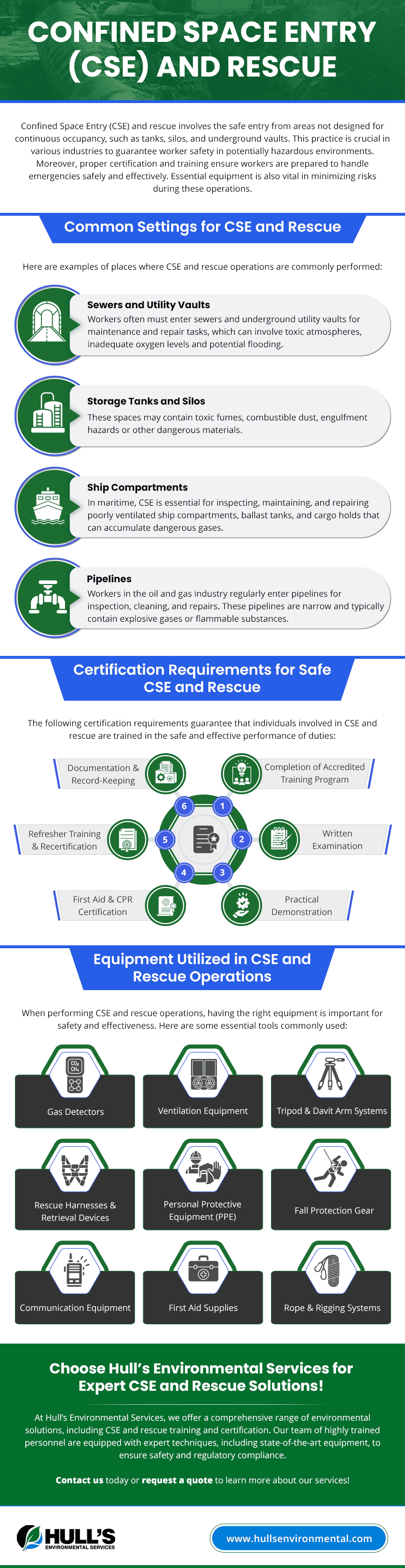
    Confined Space Entry (CSE) and rescue involves the safe entry from areas not designed for continuous occupancy, such as tanks, silos, and underground vaults. This practice is crucial in various industries to guarantee worker safety in potentially hazardous environments. Moreover, proper certification and training ensure workers are prepared to handle emergencies safely and effectively. Essential equipment is also vital in minimizing risks during these operations.

    This article explores the essential training and certification needed for personnel in CSE and rescue operations, along with the equipment required for guaranteeing safe entries and meeting all the OSHA requirements in 29 CFR 1910.146 (CSE standard). OSHA has clearly stated that using only 911 for CSE rescue does not meet the standard and is a violation of the rule.

    Common Settings for CSE and Rescue

    Here are examples of places where CSE and rescue operations are commonly performed:

    • Sewers and utility vaults: Workers often must enter sewers and underground utility vaults for maintenance and repair tasks, which can involve toxic atmospheres, inadequate oxygen levels and potential flooding.
    • Storage tanks and silos: These spaces may contain toxic fumes, combustible dust, engulfment hazards or other dangerous materials.
    • Ship compartments: In maritime, CSE is essential for inspecting, maintaining, and repairing poorly ventilated ship compartments, ballast tanks, and cargo holds that can accumulate dangerous gases.
    • Pipelines: Workers in the oil and gas industry regularly enter pipelines for inspection, cleaning, and repairs. These pipelines are narrow and typically contain explosive gases or flammable substances.

    Certification Requirements for Safe CSE and Rescue

    The following certification requirements guarantee that individuals involved in CSE and rescue are trained in the safe and effective performance of duties:

    1. Completion of Accredited Training Program

    Candidates must complete a training program from an accredited institution recognized by OSHA, ANSI, or NFPA. These programs cover essential topics such as regulations, hazard recognition, equipment use, air monitoring, and rescue techniques to ensure comprehensive understanding and skill development.

    2. Written Examination

    Trainees must undergo a written exam to evaluate the theoretical knowledge gained from the training. The exam aims to meet the certifying authority’s minimum threshold, demonstrating proficiency in confined space entry and rescue principles.

    3. Practical Demonstration

    Practical skills are tested in a controlled environment where candidates must demonstrate proficiency in handling equipment, understanding the dangers associated with a hazardous atmosphere, executing entry and exit procedures, and performing rescue operations. This hands-on assessment is crucial for ensuring readiness for real-world scenarios.

    4. First Aid and CPR Certification

    Candidates are required to hold current certifications in first aid and CPR from recognized organizations like the American Red Cross or the American Heart Association. This requirement makes sure that they can provide immediate medical assistance during emergencies.

    5. Refresher Training and Recertification

    Certification often necessitates periodic refresher training, usually annually, to stay updated with the latest regulations and techniques. Continuous education is essential to maintaining certification status and competency.

    6. Documentation and Record-Keeping

    Accurate records of all training sessions, certifications, and refresher courses are necessary for compliance and verification. All OSHA required confined space entry permits will be completed, reviewed, and approved before any operations are started at a site. Additionally, records of entry permits and any incidents or near-misses must be meticulously documented as part of the certification requirements.

    Equipment Utilized in CSE and Rescue Operations

    When performing CSE and rescue operations, having the right equipment is important for safety and effectiveness. Here are some essential tools commonly used:

    • Gas detectors monitor the atmosphere for toxic gases or vapors, oxygen, carbon monoxide, flammability, and hydrogen sulfide levels.
    • Ventilation equipment is essential for purging hazardous atmospheres, with intrinsically safe electric blowers preferred in flammable environments.
    • Tripod and davit arm systems provide a stable platform for non-entry rescues, especially in vertical entry scenarios like tanks and silos.
    • Rescue harnesses and retrieval devices require comfort, easy adjustment, and security features to ensure safe entry, exit, and rescue.
    • Personal protective equipment (PPE) includes hard hats, safety goggles, full-face respirators, protective clothing, and gloves, protecting from physical hazards and hazardous atmospheres.
    • Fall protection gear prevents falls and guarantees safety in unstable environments, comprising harnesses, lifelines, lanyards, and anchor connectors.
    • Communication equipment ensures communication between rescuers and outside personnel, which is vital in coordination and safety during rescue operations.
    • First aid supplies provide immediate medical attention to injured individuals, particularly in confined spaces.
    • Rope and rigging systems lower and lift personnel and equipment safely, and they need to be robust and suitable for the confined space environment.

    Choose Hull’s Environmental Services for Expert CSE and Rescue Solutions!

    At Hull’s Environmental Services, we offer a comprehensive range of environmental solutions, including CSE and rescue training and certification. Our team of highly trained personnel are equipped with expert techniques, including state-of-the-art equipment, to ensure safety and regulatory compliance.

    Contact us today or request a quote to learn more about our services!

  2. Waste Disposal

    Comments Off on Waste Disposal

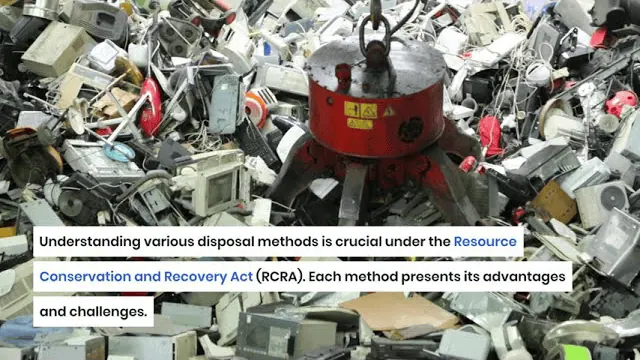
    Waste disposal involves the safe, organized, and responsible handling and elimination of waste materials generated by human activities. Understanding various disposal methods is crucial under the Resource Conservation and Recovery Act (RCRA). These methods encompass traditional options, such as landfills and incineration, and innovative alternatives, like recycling and bioremediation. Each method presents its advantages and challenges.

    This article discusses methods for disposing of hazardous and non-hazardous waste, emphasizing the importance of employing appropriate approaches to safeguard public health and the environment.

    Landfills

    Land disposal involves burying or dumping waste in designated areas known as landfills. These sites are carefully engineered with liners, leachate collection systems, and monitoring to prevent contaminating the surroundings. While effective for large volumes of waste, landfills require adequate space and can pose long-term environmental risks if not properly managed.

    Incineration

    Incineration involves burning waste at high temperatures to reduce its volume and eliminate hazardous components, effectively reducing landfill waste and generating energy. However, incineration emits pollutants, necessitating stringent pollution control measures to mitigate air pollution and ensure the safe handling of residues.

    Recycling

    Recycling involves collecting, sorting, and reprocessing waste materials to create new products. While more commonly associated with non-hazardous waste, certain hazardous materials can also be recycled if they can be safely treated and reused. Recycling conserves resources, reduces landfill waste, and can be economically beneficial.

    Treatment

    Treatment methods involve using chemical, physical, or biological processes to neutralize or stabilize hazardous waste, making it less harmful or easier to handle. Chemical precipitation, oxidation, and bioremediation are common treatment techniques. These processes can reduce the toxicity of waste but may generate secondary waste streams and require specialized facilities.

    Secure Land Disposal Facilities

    Secure land disposal facilities are engineered to isolate highly toxic or persistent hazardous waste from the environment for long periods. These facilities, such as deep geological repositories, employ multiple barriers and containment measures to prevent contamination of soil and water resources. They are designed for waste with long-term hazards or unknown future risks.

    Waste-to-Energy (WTE) Facilities

    WTE facilities use waste as a fuel to generate energy through processes including combustion or gasification. While primarily used for municipal solid waste, some facilities can handle certain types of hazardous waste. WTE also reduces the volume of waste going to landfills and generates renewable energy, but it requires careful management of emissions and ash residues.

    Hazardous Waste Landfills

    Specialized hazardous waste landfills are designed specifically for the disposal of hazardous waste. These facilities have stringent waste acceptance, handling, and containment requirements to minimize environmental risks and protect public health. They are equipped with liners, leachate collection systems, and monitoring to prevent soil and groundwater contamination.

    Bioremediation

    Bioremediation utilizes microorganisms or plants to degrade or neutralize hazardous substances in soil or water. It offers a natural and sustainable approach to waste remediation, but its effectiveness depends on site conditions, contaminant type, and microbial activity. Bioremediation can be cost-effective for certain types of contamination.

    Encapsulation

    Encapsulation involves immobilizing hazardous waste in materials, such as concrete or epoxy. This method prevents contaminants from leaching into the environment and is often used for waste that cannot be easily disposed of using other methods. However, encapsulation may not address underlying contamination sources and requires careful design and construction.

    Waste Disposal

    Choose Hull’s Environmental Services for Expert Waste Disposal Solutions!

    At Hull’s Environmental Services, we specialize in waste disposal and transportation, serving as your reliable environmental partner for comprehensive waste management solutions. Our commitment to delivering high-quality service guarantees that every task is completed accurately on the initial attempt, saving you valuable time and resources.

    Contact us today or request a quote to get started!

  3. Advancing Environmental Remediation: Techniques and Services

    Comments Off on Advancing Environmental Remediation: Techniques and Services

    Click to Expand

    Advancing Environmental Remediation: Techniques and Services

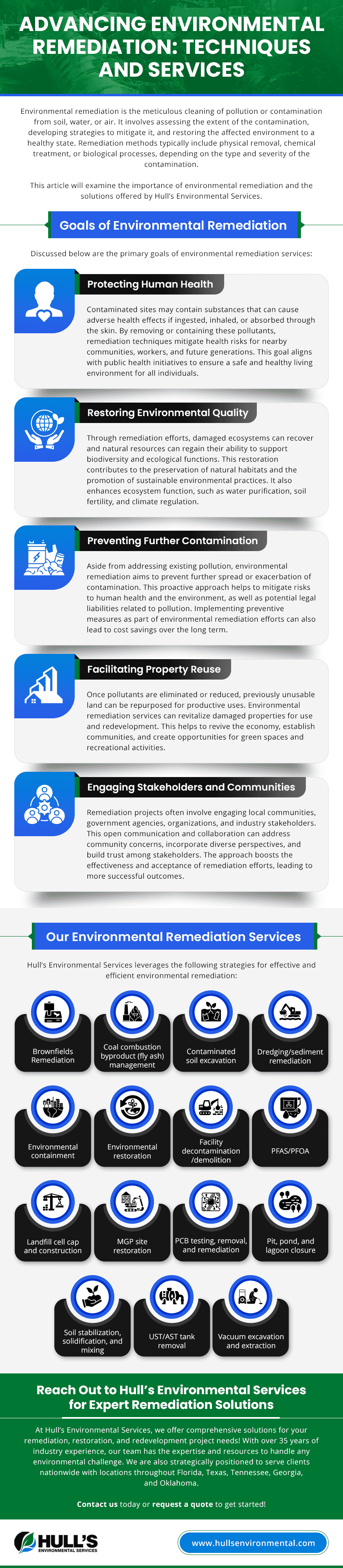
    Environmental remediation is the meticulous cleaning of pollution or contamination from soil, water, or air. It involves assessing the extent of the contamination, developing strategies to mitigate it, and restoring the affected environment to a healthy state. Remediation methods typically include physical removal, chemical treatment, or biological processes, depending on the type and severity of the contamination.

    This article will examine the importance of environmental remediation and the solutions offered by Hull’s Environmental Services.

    Goals of Environmental Remediation

    Discussed below are the primary goals of environmental remediation services:

    Protecting Human Health

    Contaminated sites may contain substances that can cause adverse health effects if ingested, inhaled, or absorbed through the skin. By removing or containing these pollutants, remediation techniques mitigate health risks for nearby communities, workers, and future generations. This goal aligns with public health initiatives to ensure a safe and healthy living environment for all individuals.

    Restoring Environmental Quality

    Through remediation efforts, damaged ecosystems can recover and natural resources can regain their ability to support biodiversity and ecological functions. This restoration contributes to the preservation of natural habitats and the promotion of sustainable environmental practices. It also enhances ecosystem function, such as water purification, soil fertility, and climate regulation.

    Preventing Further Contamination

    Aside from addressing existing pollution, environmental remediation aims to prevent further spread or exacerbation of contamination. This proactive approach helps to mitigate risks to human health and the environment, as well as potential legal liabilities related to pollution. Implementing preventive measures as part of environmental remediation efforts can also lead to cost savings over the long term.

    Facilitating Property Reuse

    Once pollutants are eliminated or reduced, previously unusable land can be repurposed for productive uses. Environmental remediation services can revitalize damaged properties for use and redevelopment. This helps to revive the economy, establish communities, and create opportunities for green spaces and recreational activities.

    Engaging Stakeholders and Communities

    Remediation projects often involve engaging local communities, government agencies, organizations, and industry stakeholders. This open communication and collaboration can address community concerns, incorporate diverse perspectives, and build trust among stakeholders. The approach boosts the effectiveness and acceptance of remediation efforts, leading to more successful outcomes.

    Our Environmental Remediation Services

    Hull’s Environmental Services leverages the following strategies for effective and efficient environmental remediation:

    • Brownfields remediation: cleaning up abandoned or underutilized properties contaminated by hazardous substances for redevelopment
    • Coal combustion byproduct (fly ash) management: handling and disposal of residues produced from coal combustion processes to minimize environmental impacts
    • Contaminated soil excavation: removing polluted soil from sites to reduce exposure risks and restore ecological quality
    • Dredging/sediment remediation: removing contaminated sediments from water bodies to improve water quality
    • Environmental containment: preventing the spread of contaminants by isolating them within engineered barriers or structures
    • Environmental restoration: rehabilitating ecosystems and habitats to promote biodiversity and ecological balance
    • Facility decontamination/demolition: cleaning and dismantling structures contaminated with hazardous materials
    • PFAS/PFOA: addressing per- and polyfluoroalkyl substances to safeguard public health and protect the environment from harmful chemical contaminants
    • Landfill cell cap and construction: covering and constructing engineered barriers over landfill cells to contain and manage waste
    • MGP site restoration: remediation of former manufactured gas plant sites contaminated with hazardous substances
    • PCB testing, removal, and remediation: assessing, removing, and remediating polychlorinated biphenyl (PCB) contamination to prevent health and environmental risks
    • Pit, pond, and lagoon closure: closing and rehabilitating pits, ponds, or lagoons contaminated with pollutants to avoid further ecological degradation
    • Soil stabilization, solidification, and mixing: treating contaminated soil to improve its physical properties and reduce leaching of pollutants
    • UST/AST tank removal: removing underground storage tanks (USTs) or aboveground storage tanks (ASTs) to prevent leaks and soil contamination
    • Vacuum excavation and extraction: using vacuum technology to safely excavate and remove contaminated materials from sites

    Reach Out to Hull’s Environmental Services for Expert Remediation Solutions

    At Hull’s Environmental Services, we offer comprehensive solutions for your remediation, restoration, and redevelopment project needs! With over 35 years of industry experience, our team has the expertise and resources to handle any environmental challenge. We are also strategically positioned to serve clients nationwide with locations throughout Florida, Texas, Tennessee, Georgia, and Oklahoma.

    Contact us today or request a quote to get started!

  4. PFAS Implications for Waste Generators

    Comments Off on PFAS Implications for Waste Generators

    Per- and polyfluoroalkyl substances (PFAS) are human-made chemicals utilized in various industrial and consumer products for their water- and grease-resistant properties. Examples include non-stick cookware, food packaging, stain-resistant fabrics, and firefighting foams. Due to their persistence and potential environmental and health risks, PFAS pose significant challenges for waste generators.

    This article will look at the dangers associated with these chemicals and examine how Environmental Protection Agency (EPA) rulings could affect various industries.

    Environmental and Health Risks Associated With PFAS Contamination

    PFAS contamination poses risks due to the potential for persistence, bioaccumulation, and toxicological properties. Once released into the environment, these chemicals can stay for extended periods without degrading, leading to widespread soil, water, and air contamination. This allows them to accumulate in ecosystems and enter the food chain.

    Human exposure to PFAS can also occur through consuming contaminated food and water and inhaling airborne particles. These chemicals have been linked to various adverse health effects, including developmental, reproductive, and immunological disorders.

    EPA Actions To Address PFAS

    EPA has accelerated the research and actions needed to tackle the crisis. Here are some of the actions they are taking:

    Methods for Measuring PFAS in the Environment

    In January 2024, the EPA released the following methods to better measure chemicals in the environment:

    • Final EPA Method 1633is a standardized procedure developed by the EPA for testing the presence of 40 different types of PFAS. This provides a comprehensive approach to analyzing contamination levels.
    • Final EPA Method 1621serves as a screening tool designed to detect the presence of chemical substances containing carbon-fluorine bonds. It offers a broader scope for knowing contaminants and other related compounds in wastewater treatment plants and other facilities.
    • Other Test Method (OTM)-50 measures volatile fluorinated compounds in air samples. This method is particularly useful for monitoring airborne emissions from industrial processes, waste disposal sites, and other sources.

    Proposed Resource Conservation and Recovery Act

    In February 2024, the EPA introduced two proposed regulations under the Resource Conservation and Recovery Act (RCRA). They aimed at protecting communities from emerging chemicals of concern. These regulations would expand the list of RCRA hazardous constituents to include nine types of PFAS, enhancing regulatory oversight and management of these contaminants.

    The proposed rules clarify the EPA’s and authorized states’ authority to mandate cleanup of the substances intended under the RCRA framework. This guarantees a more robust response to chemical contamination incidents and other environmental hazards. If implemented, these regulations will represent a significant step forward in addressing chemical-related ecological and health risks.

    Proposal To Clarify Authority To Address Releases of Hazardous Waste at Treatment, Storage, and Disposal Facilities

    On February 8, 2024, the EPA introduced proposed changes to amend the definition of hazardous waste. These amendments address corrective actions for releases from solid waste management units at approved facilities. They seek to grant explicit regulatory authority to address contaminants not currently covered by the regulatory definition of hazardous waste.

    Partner With Hull’s Environmental Services for PFAS Management

    At Hull’s Environmental Services, we provide tailored solutions to address contamination challenges. Our team of experts is committed to delivering comprehensive services, including contamination assessment, remediation, and ongoing monitoring.

    Contact us today to learn more!

  5. Rapid and Reliable: The Essence of Emergency Response Services

    Comments Off on Rapid and Reliable: The Essence of Emergency Response Services

    Click to Expand

    Rapid and Reliable: The Essence of Emergency Response Services

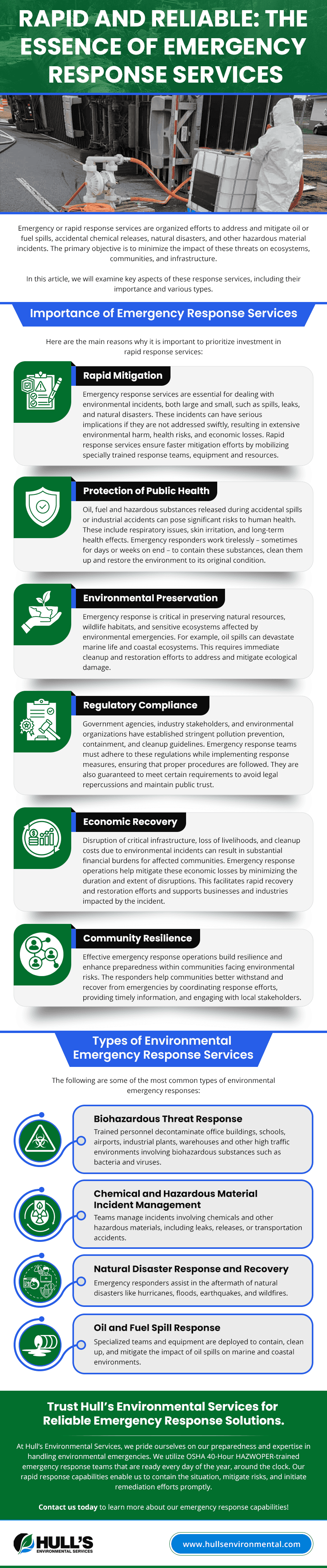
    Emergency or rapid response services are organized efforts to address and mitigate oil or fuel spills, accidental chemical releases, natural disasters, and other hazardous material incidents. The primary objective is to minimize the impact of these threats on ecosystems, communities, and infrastructure.

    In this article, we will examine key aspects of these response services, including their importance and various types.

    Importance of Emergency Response Services

    Here are the main reasons why it is important to prioritize investment in rapid response services:

    Rapid Mitigation

    Emergency response services are essential for dealing with environmental incidents, both large and small, such as spills, leaks, and natural disasters. These incidents can have serious implications if they are not addressed swiftly, resulting in extensive environmental harm, health risks, and economic losses. Rapid response services ensure faster mitigation efforts by mobilizing specially trained response teams, equipment and resources.

    Protection of Public Health

    Oil, fuel and hazardous substances released during accidental spills or industrial accidents can pose significant risks to human health. These include respiratory issues, skin irritation, and long-term health effects. Emergency responders work tirelessly – sometimes for days or weeks on end – to contain these substances, clean them up and restore the environment to its original condition.

    Environmental Preservation

    Emergency response is critical in preserving natural resources, wildlife habitats, and sensitive ecosystems affected by environmental emergencies. For example, oil spills can devastate marine life and coastal ecosystems. This requires immediate cleanup and restoration efforts to address and mitigate ecological damage.

    Regulatory Compliance

    Government agencies, industry stakeholders, and environmental organizations have established stringent pollution prevention, containment, and cleanup guidelines. Emergency response teams must adhere to these regulations while implementing response measures, ensuring that proper procedures are followed. They are also guaranteed to meet certain requirements to avoid legal repercussions and maintain public trust.

    Economic Recovery

    Disruption of critical infrastructure, loss of livelihoods, and cleanup costs due to environmental incidents can result in substantial financial burdens for affected communities. Emergency response operations help mitigate these economic losses by minimizing the duration and extent of disruptions. This facilitates rapid recovery and restoration efforts and supports businesses and industries impacted by the incident.

    Community Resilience

    Effective emergency response operations build resilience and enhance preparedness within communities facing environmental risks. The responders help communities better withstand and recover from emergencies by coordinating response efforts, providing timely information, and engaging with local stakeholders.

    Types of Environmental Emergency Response Services

    The following are some of the most common types of environmental emergency responses:

    • Biohazardous threat response: Trained personnel decontaminate office buildings, schools, airports, industrial plants, warehouses and other high traffic environments involving biohazardous substances such as bacteria and viruses.
    • Chemical and hazardous material incident management: Teams manage incidents involving chemicals and other hazardous materials, including leaks, releases, or transportation accidents.
    • Natural disaster response and recovery: Emergency responders assist in the aftermath of natural disasters like hurricanes, floods, earthquakes, and wildfires.
    • Oil and fuel spill response: Specialized teams and equipment are deployed to contain, clean up, and mitigate the impact of oil spills on marine and coastal environments.

    Trust Hull’s Environmental Services for Reliable Emergency Response Solutions.

    At Hull’s Environmental Services, we pride ourselves on our preparedness and expertise in handling environmental emergencies. We utilize OSHA 40-Hour HAZWOPER-trained emergency response teams that are ready every day of the year, around the clock. Our rapid response capabilities enable us to contain the situation, mitigate risks, and initiate remediation efforts promptly.

    Contact us today to learn more about our emergency response capabilities!

  6. Hull’s Environmental Services, Inc. Welcomes Jamie Arleo as New Environmental, Health and Safety Director.

    Comments Off on Hull’s Environmental Services, Inc. Welcomes Jamie Arleo as New Environmental, Health and Safety Director.

    Panama City, FL – Hull’s Environmental Services, Inc. (Hull’s) is proud to announce the appointment of Jamie Arleo as the newest member of our team, serving as Environmental, Health and Safety Director. With over 25 years of experience in environmental management and emergency response, Jamie brings a wealth of expertise and leadership to the organization.

    In his previous role at the Florida Department of Environmental Protection, Jamie distinguished himself as a highly skilled emergency responder, managing the busiest response district in the state with exceptional proficiency. His responsibilities included supervising emergency responders and support personnel, serving as the designated State On-Scene Coordinator (SOSC) for hazardous materials incidents and oil spills, and conducting hazardous waste inspections at commercial facilities.

    Jamie’s extensive training and certifications, including National Incident Management System (NIMS) qualifications, Hazardous Waste Management and Hazardous Materials Transportation expertise, underscore his commitment to excellence in environmental services and emergency response. He has played key roles in coordinating responses to hurricanes, train derailments, pipeline releases, and environmental disasters, demonstrating his ability to manage complex situations with professionalism, efficiency and effectiveness.

    In addition to his operational responsibilities, Jamie has contributed significantly to leadership and training initiatives, serving as an instructor for OSHA Hazardous Waste Operations and Emergency Response and DOT Hazardous Materials Transportation courses. His dedication to continuous improvement and knowledge sharing has been instrumental in enhancing the capabilities of emergency responders across multiple agencies.

    “Jamie’s decades of experience and proven leadership in the environmental industry make him an invaluable addition to our team. It is a testament to his ability to navigate complex challenges and lead teams with confidence and resilience, said Tony Payne, Executive Vice President at Hull’s. These are the exact qualities we were looking for in our new Environmental, Health and Safety Director.”

    His pivotal roles in hurricane response operations and as Deputy State On-Scene Coordinator during the Deepwater Horizon response showcase his unwavering dedication to ensuring public safety and environmental protection in the face of adversity. Jamie’s adeptness at coordinating multi-agency efforts and fostering collaboration among diverse stakeholders has been instrumental in orchestrating effective response strategies and mitigating environmental hazards. His strong leadership qualities, coupled with his profound commitment to service and integrity, make him a trusted and invaluable asset to our team.”

    Jamie holds a Bachelor of Arts degree in Biology from Saint Leo College and has completed a vast array of training for oil spill response, hazardous waste operations, WMD, and incident management.

  7. Oil Spill Readiness Plans and Training Exercises

    Comments Off on Oil Spill Readiness Plans and Training Exercises

    Oil spills are a major environmental hazard that can have devastating effects on marine life, the economy, and human health. Therefore, it is essential for businesses to have a comprehensive oil spill readiness plan in place.

    Oil Spill

    A well-designed oil spill contingency plan should be easy to follow and should provide site-specific procedural details that address various spill scenarios and situations. The primary objectives of spill response plans, regardless of whether a facility is a production, storage, or a transport facility, are to:

    • Allow response personnel to prepare for and safely respond to spill incidents
    • Ensure an effective and efficient response that highlight and account for geographical challenges
    • Identify potential equipment, manpower, and other resources necessary to implement a spill response
    • Outline response procedures and techniques for combating the spill at a specific location and it’s conditions
    • Improve regulatory compliance efforts

    According to the Environmental Protection Agency (EPA), an oil spill contingency plan should be a set of instructions that outlines necessary procedures for before, during, and after an emergency. “A contingency plan looks at all the possibilities of what could go wrong and, “contingent” upon actual events, has the contacts, resource lists, and strategies to assist in the response to the spill.”

    Hazard identification, vulnerability analysis, risk assessment, and response actions are the four major elements of a well-designed oil spill containment plan. These hazards should be identified, and oil spill response procedures put in place to counteract challenges caused by each specific situation. It may be possible for certain identified hazards to be mitigated, essentially eliminating the hazard altogether. The oil spill contingency plan should address best possible spill containment measures, how to prevent certain populations or environments from exposure to oil, and what can be done to repair the damage done by the spill.

    Having a well-designed oil spill readiness plan is essential for businesses to minimize the impact of oil spills on the environment, economy, and human health. By following the guidelines provided by regulatory agencies, businesses can ensure that they are prepared to respond to oil spills effectively and efficiently.

    In addition to having a well-designed oil spill readiness plan, it is also important for businesses to conduct regular training exercises to ensure that their staff is prepared to respond to oil spills effectively and efficiently. Table-top exercises are one such training method that can be used to test the risk of operations and allow for analysis of the incident response.

    Table-top exercises are designed to simulate an oil spill scenario in a controlled environment and allow participants to undertake simulated emergency response actions in a low-risk environment. These exercises provide an opportunity to assess response plans and procedures, determine responder and equipment readiness, clarify roles and responsibilities, identify gaps in response capability, build individual and team confidence, measure performance, promote awareness of potential incidents, and prepare for real oil spill events.

    Two oil spill response technicians deploy 18 inch containment boom into the water for oil containment and recovery

    Other types of exercises include notification exercises, walk-through guided exercises, equipment deployment exercises, incident management exercises, and full-scale incident management exercises. These exercises are designed to test different aspects of the oil spill readiness plan and help identify areas for improvement.

    In conclusion, conducting regular table-top training exercises is an essential component of a comprehensive oil spill readiness plan. By testing the plan in a controlled environment, businesses can identify gaps in their response capability and areas for future development, and improve their preparedness and response capabilities.

    If your organization is interested in learning more about Oil Spill Readiness Plans and Training Exercises, contact Hull’s at 1-866-450-9077.

  8. PFAS

    Comments Off on PFAS

    In recent years, per- and polyfluoroalkyl substances (PFAS) have become critical environmental issues. These are artificial chemicals used in various industrial and consumer products, such as non-stick cookware, stain-resistant fabrics, firefighting foam, and food packaging. These substances can accumulate in the human body over time and contaminate the environment.

    In this blog post, we’ll take a closer look at PFAS and its impact on human health and the ecosystem. We’ll also cover the role of the Environmental Protection Agency (EPA) in addressing this challenge and how Hull’s Environmental Services can help tackle it.

    The Environmental and Health Implications of PFAS

    PFAS are also called “forever chemicals” because they don’t naturally break down in the environment. Once released, they can persist for decades or centuries, accumulating and potentially entering the food chain.

    Human health is at risk due to PFAS exposure. Recent research has linked it to a range of health problems, including:

    • Cancer
    • Development issues in infants
    • Liver damage
    • Weakened immune system

    Environmental consequences are equally alarming. PFAS can leach into soil and water from landfills, wastewater treatment plants, and industrial sites. Since these substances can bioaccumulate meaning they accumulate in the tissues of animals they can potentially affect entire ecosystems.

    EPAs Steps in Addressing and Regulating PFAS

    EPA is at the forefront of setting standards and guidelines related to PFAS to protect public health and the environment. Recently, the agency shifted its enforcement focus towards addressing this substance.

    The EPA’s updated National Enforcement and Compliance Initiatives include targeting entities that significantly contribute to its release into the environment. Experts believe this approach could prompt manufacturers to seek alternatives to PFAS-containing materials in their products. Meanwhile, the waste industry emphasizes the need for scrutiny upstream at the manufacturing level to control contamination.

    EPAs current pace of regulatory development has led some states to adopt their own rules and regulations to address PFAS pollution. Entrepreneurs and business owners should know these state-specific regulations to ensure compliance.

    While significant progress has been made in understanding this chemical, there are critical aspects that EPA researchers and partners are still actively figuring out:

    • Detection and measurement of PFAS in the environment
    • Exposure levels
    • Health effects
    • Removal from drinking water
    • Management and disposal

    Hull’s Environmental Services: Your Partner in PFAS Remediation and Management

    Amidst the uncertainty surrounding PFAS regulations, businesses need a reliable partner to navigate the complexities of this emerging environmental pollutant. Hull’s Environmental Services is here to assist you in two critical areas:

    Environmental Remediation

    Our expertise in soil and groundwater remediation ensures that your business can effectively address PFAS contamination issues. We offer a variety of solutions to clean up affected sites and restore them to compliance with emerging regulations. Collaborating with businesses, we create tailored plans that reduce liability and costs while enhancing cleanup efficiency and restoration efforts.

    Some of our environmental remediation solutions, include:

    • Brownfields remediation
    • Contaminated soil excavation
    • Dredging/sediment remediation
    • Environmental containment
    • Environmental restoration
    • Facility decontamination/demolition
    • Hazardous waste management
    • Landfill cell cap construction
    • MGP site restoration
    • PCB testing, removal, remediation
    • Pit, pond, and lagoon closure
    • Soil stabilization, solidification, and mixing
    • UST/AST tank removal
    • Vacuum excavation extraction

    Waste Management

    Proper disposal of PFAS-contaminated soil, groundwater, and other mediums is crucial. Hull’s Environmental Services provides safe and compliant waste management solutions, helping you minimize environmental impact and regulatory risks.

    Our services encompass waste classification, profiling, manifesting, and safe transportation to authorized treatment, storage, and disposal facilities (TSDF). Regardless of your waste type, we deliver dependable and strategic solutions tailored to meet your hazardous and non-hazardous waste disposal requirements. Operating from Florida, Texas, Georgia, Tennessee, and Oklahoma, we possess all the essential permits and licenses for the transportation and disposal of diverse waste streams.

    Take Action Against PFAS Contamination With Hull’s Environmental Services

    If you’re concerned about PFAS contamination in your area or need remediation assistance, look no further than Hull’s Environmental Services! We specialize in environmental cleanup and can provide expert guidance and solutions to address PFAS-related issues. Together, we can work towards a cleaner, safer environment for present and future generations! Contact us today to learn more and take action.

  9. Types of Tanks

    Comments Off on Types of Tanks

    Different types of storage tanks are designed to contain various fluids such as compressed gases, oil, and water. Manufacturers offer a variety of tanks made from different materials and equipped with specific safety and tracking features, catering to the diverse needs of different fluids and industries. Unpressurized storage tanks come in various shapes like cylindrical and square, along with different sizes and customizable options. These tanks serve as storage vessels or reservoirs. Tanks can be classified as above-ground or underground, each with its own distinct characteristics.

    Above-ground storage tanks (ASTs) are user-friendly and require less maintenance. They offer a convenient solution for storing fluids. Underground storage tanks (USTs) are built to be sturdier and more robust. They are capable of safely containing hazardous materials, even when located partially or fully underground. Explore the advantages and types of both tank categories to gain valuable insights for your application.

    Above-ground Storage Tanks (ASTs)

    Above-ground storage tank options can store fluids short-term or long-term. The tanks are typically cheaper than underground storage options and are easier to maintain. Some popular varieties of above-ground storage tanks found in different industries include:

    • Fixed Roof Tanks:These cylindrical tanks store contents at approximately ambient pressures (of no higher than 0.5 PSI). They have a steel-welded construction and pressure-vacuum valves to ensure atmospheric pressure levels and are typically topped with a cone or dome roof. They are available in several different sizes for different applications.
    • Floating Roof Tanks:Floating roof tanks have separated roof structures that “float” on top of the contents. Some floating roof tanks are only topped with a floating roof, whereas others have an internal floating roof as well as a traditional affixed roof at the top of the structure.
    • Roofless Tanks:Roofless tanks are simply that — roofless. They can hold fluids like stormwater that need an open top for collection and don’t need to be protected from the elements.
    • Milk Tanks:These specialty tanks comply with dairy and agricultural regulations to safely cool and store large quantities of milk. They undergo rapid cooling to store milk with minimal risks of bacterial growth and withstand frequent cleanings.

    Underground Storage Tanks (USTs)

    Underground storage tanks are tanks that are at least 10% submerged underground during standard operations. These tanks are often broken down into categories based on the types of fluids they will hold.

    • Fuel or Fuel Storage Tanks: These tanks can hold gasoline underground at filling stations to facilitate more efficient space use.
    • Horizontal Tanks:Horizontal tanks can be built and coated to hold anything from water and consumable food products to fuel, chemicals, or gases. They are also specially coated to prevent corrosion damage from long-term exposure to the ground and elements.
    • Septic Tanks:These tanks are a key aspect of septic systems. They are commonly used in residential or commercial properties in rural areas to break down solid waste with anaerobic bacteria. The resulting water is then drained into a drain field. Septic tanks hold the remaining solid waste and must be intermittently drained to remove sludge buildup before it can enter the water table.
    • Water Tanks:There are multiple different types of water tanks that can hold potable water or rainwater. Applications include supplementing the water system when the natural water table is insufficient, irrigation and drainage applications to protect areas from excess water, holding water as fire suppression supplies, and more.

    Storage Tank Cleaning Services From Hull’s Environmental Services

    Aboveground and underground storage tanks both benefit from regular cleaning and preventative maintenance to keep corrosion, leaks, and degradation at bay. At Hull’s Environmental Services, we provide reliable tank cleaning and removal services for residential and commercial applications, including crude oil containers, wastewater storage tanks, barges, and more. Contact us today to learn more about our cleaning and removal services to keep your maintenance and operations on track.

  10. Earth Day 2023 – Our Small Contribution

    Comments Off on Earth Day 2023 – Our Small Contribution

    For our contribution to Earth Day 2023, Hull’s was proud to once again participate in the 3rd Annual Great Port Cleanup on Friday, April 21st. In a partnership with Port Tampa Bay and Keep Tampa Bay Beautiful, the event is designed to remove trash and marine debris from several sites in and around the port. The event is a call to action for the port community to support the ongoing efforts to keep Tampa Bay a beautiful place to live, work, and play.

    Volunteer Removing Trash from Mangroves

    Old furniture, demolished tiles, car and truck tires, wood, and a dilapidated boat were part of an enormous cache of trash and debris that was collected, transported and disposed of by days end. Specifically, the numbers looked like this:

    -32 sites

    -851 volunteers

    -1,877 Bags of trash

    -79,698 lbs of debris and bags removed

    Plastic Waste

    In addition to the trash and debris, it was also an opportunity to remove 30,000 pounds of invasive weeds that can choke out mangroves and other native plants critical to a health shoreline.

    More details and additional pictures of the event can be found here:  Third Annual Great Port Clean Up – Final Report.

    Some encouraging facts from 2022 to 2023:

    -Total Number of Sites: 32 total – 3 open to public; 29 private groups. 11 more sites in 2023 vs 2022.

    -Total Number of Volunteers: 851. Last year’s volunteers: 451 or an increase of 400 volunteers.

    -Total Weight of Trash Collected in Pounds: 79,698. Last Year’s weight in pounds: 37,425 or an increase of 42,273 pounds in 2023.

    -Total Number of 43 gallon trash bags collected: 1877. Last year’s bags collected: 724 or an increase of 1,153 Bags collected in 2023.

    -Removed 30,013 pounds of invasive weeds; almost double from 2022.