Oil, gas, and petrochemical operations carry inherent environmental risks due to the handling, transfer, and storage of hazardous materials such as crude oil, fuels, and chemical byproducts. Incidents involving leaks, spills, or equipment failure can lead to immediate safety hazards, environmental contamination, and regulatory exposure. Hull’s Environmental Services provides response, cleanup, and remediation support for these industries, with capabilities structured around rapid deployment, containment, and recovery. Our services are available for both planned industrial activities and unplanned incidents requiring immediate field intervention.
Industrial Operations Risk Overview
Operations across extraction sites, refineries, pipelines, storage terminals, and transport routes involve continuous movement of petroleum-based products and petrochemical materials. The primary risks include product release during transfer operations, tank overflows, pipeline ruptures, vehicle-related incidents, and equipment failure during processing or maintenance activities.
These situations require immediate action to limit the spread, reduce environmental impact, and restore operational control. We support clients with field teams trained for industrial environments where timing, coordination, and containment directly affect downtime and regulatory outcomes.
Emergency Spill Response Services
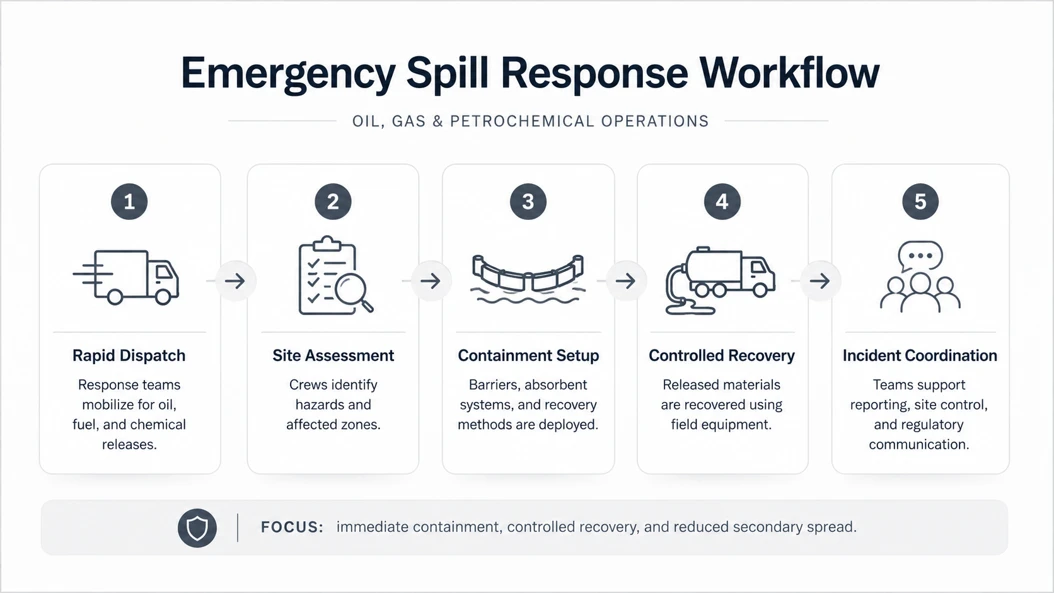
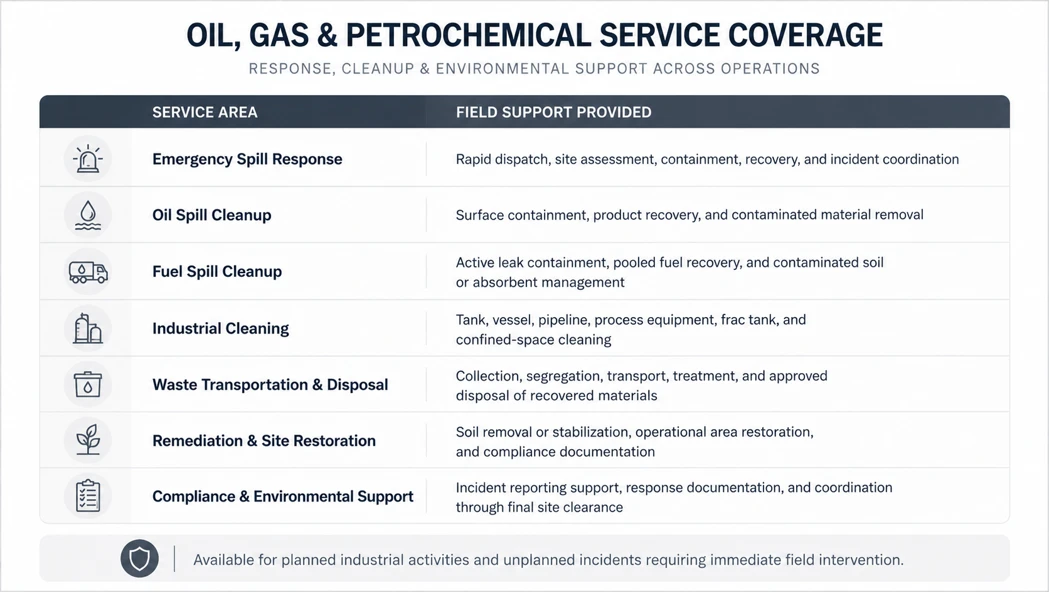
Hull provides emergency spill response services for oil, fuel, and chemical releases across industrial and transport environments. Response teams are available for rapid dispatch to contain active spills, isolate affected zones, and begin recovery operations.
Work begins with site assessment and hazard identification, followed by containment setup using appropriate barriers, absorbent systems, and vacuum recovery methods. Field crews coordinate directly with site supervisors, emergency personnel, and regulatory contacts to support reporting requirements and incident control procedures.
The focus is immediate containment, controlled recovery of released materials, and reduction of secondary spread to soil, drainage systems, or water sources.
Oil Spill Cleanup Services
Hull provides full oil spill cleanup support for crude oil, diesel, gasoline, hydraulic oils, and other petroleum products released in industrial or transport settings. Cleanup operations include surface containment, product recovery, and contaminated material removal.
Equipment such as vacuum trucks, skimmers, absorbent booms, and portable recovery units are deployed based on site conditions. Once the free product is recovered, crews address impacted soil or surface areas to remove residual contamination and prepare the site for restoration activities.
This service supports refinery operations, pipeline corridors, storage facilities, and marine-adjacent locations where petroleum releases require fast intervention and controlled cleanup execution.
Fuel Spill Cleanup and Transportation Incident Response
Fuel handling and transport activities present high exposure risks during loading, unloading, and over-the-road movement. Hull provides fuel spill cleanup services for diesel, gasoline, aviation fuel, and related products released during transport accidents, terminal transfers, or station incidents.
Response includes containment of active leaks, recovery of pooled fuel, and management of contaminated soil or absorbent materials. For roadway incidents, coordination with emergency responders allows for safe traffic control and environmental stabilization at the scene.
Post-incident services may include soil excavation, waste transport, and disposal in accordance with regulatory requirements.
Industrial Cleaning
Hull provides industrial cleaning services including:
- Tank, vessel, and pipeline cleaning for petroleum and chemical residues
- Process equipment decontamination
- Frac tank cleaning during maintenance or turnover
- Confined-space entry cleaning in high-risk environments
These services support routine maintenance cycles, planned shutdowns, shutdown turnarounds, and post-disruption contamination removal. Crews use controlled entry procedures and industrial-grade cleaning systems to restore equipment performance and reduce cross-contamination risks.
Waste Transportation and Disposal
Recovered materials from spill response and cleaning activities are collected, segregated, and transported for approved treatment or disposal. Hull manages both hazardous and non-hazardous waste in accordance with the Resource Conservation and Recovery Act (RCRA) and other applicable regulations. Contaminated soils, liquids, absorbents, and other waste materials are properly characterized and handled under regulated waste management procedures to support compliant transportation, treatment, disposal, and recovery workflows.
Remediation and Site Restoration
Where contamination extends beyond surface impact, remediation activities are performed to remove or stabilize affected soil and restore operational areas. Full documentation is provided to support compliance tracking and regulatory reporting requirements.
Compliance and Environmental Support
Across all activities, Hull’s aligns field operations with environmental and safety regulations. This includes incident reporting support, structured documentation of response actions, and coordination with client teams from initial containment through final site clearance.
24/7 Emergency Spill Response Ready
As a certified OSRO, Hull maintains round-the-clock readiness with specialized equipment (including vacuum trucks, containment boom, and roll-off units) for rapid oil spill cleanup and industrial incident support. When every minute matters, our teams are already mobilized. Contact us immediately for emergency response or standby support.