Industrial Cleaning & Maintenance
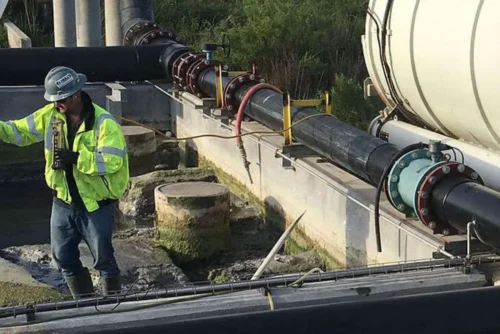
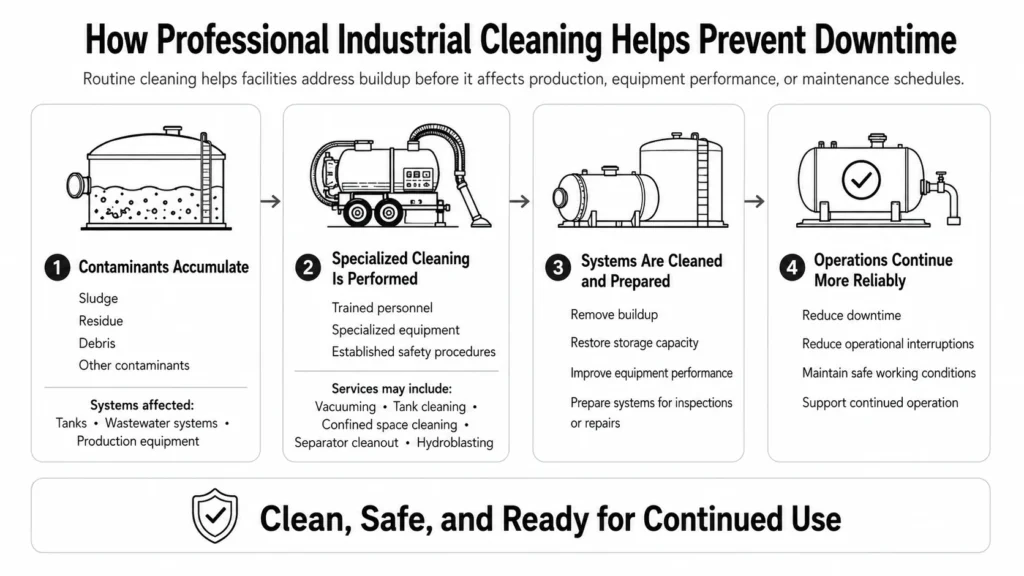
Industrial facilities depend on specialized cleaning to keep equipment operating properly, maintain safe working conditions, and support compliance requirements. Over time, sludge, residue, debris, and other contaminants can collect in tanks, wastewater systems, and production equipment, making regular maintenance an important part of daily operations.
What Is Industrial Cleaning and Maintenance?
Industrial cleaning and maintenance involves specialized cleaning methods used for equipment, storage systems, and facility infrastructure. Unlike general cleaning, these services require trained personnel, specialized equipment, and established safety procedures to complete projects efficiently.
Whether the work is scheduled maintenance or part of a larger facility project, professional cleaning helps remove buildup, improve equipment performance, and prepare systems for inspections, repairs, or continued operation.
Key Industrial Cleaning Services That Support Facility Operations
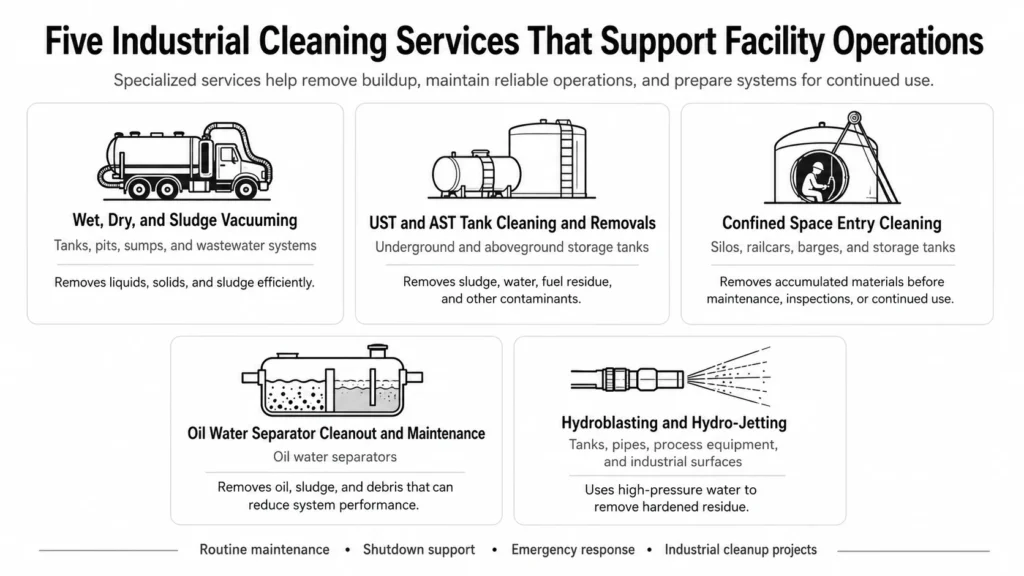
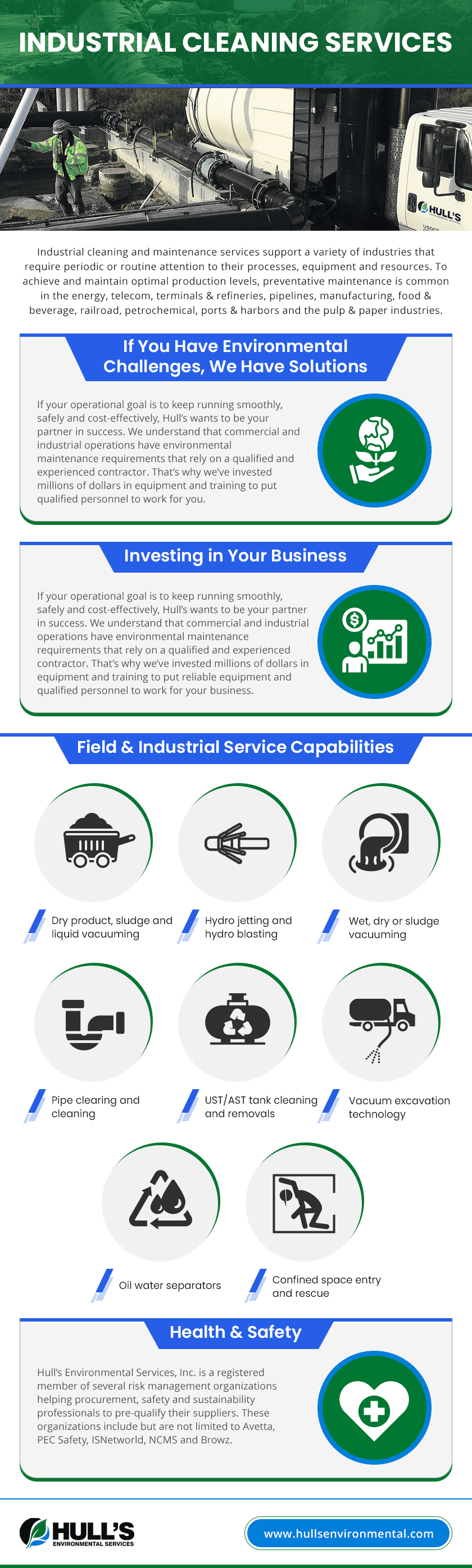
Professional industrial cleaning and maintenance covers a wide range of services, each suited to different equipment and facility needs. Below are five common services that help businesses reduce downtime, maintain reliable operations, and prepare systems for continued use.
Wet, Dry, and Sludge Vacuuming for Industrial Systems
Waste materials can build up quickly in tanks, pits, sumps, and wastewater systems. Professional vacuum truck services remove liquids, solids, and sludge efficiently, helping facilities maintain cleaner systems while reducing manual labor and downtime.
Hull’s Environmental Services provides vacuum truck services for routine maintenance, shutdown support, emergency response, and industrial cleanup projects across a wide range of facilities.
UST and AST Tank Cleaning and Removals
Underground storage tanks (USTs) and aboveground storage tanks (ASTs) naturally collect sludge, water, fuel residue, and other contaminants over time. Professional fuel tank cleaning services help restore storage capacity, prepare tanks for inspections or repairs, and support safe operation.
Hull’s performs tank cleaning services and UST/AST removals for commercial, industrial, utility, and marine applications, handling each project with equipment suited to the job.
- Wet, dry, and sludge vacuuming for industrial systems
- UST and AST tank cleaning and removals
- Confined space entry cleaning for silos, railcars, barges, and storage tanks
- Oil water separator cleanout and maintenance
- Hydroblasting and hydro-jetting for tanks, pipes, and process equipment
Confined Space Entry Cleaning for Silos, Railcars, and Barges
Cleaning enclosed spaces requires experienced crews and specialized procedures. Silos, railcars, barges, and storage tanks often require confined space entry to remove accumulated materials before maintenance, inspections, or continued use.
Hull’s performs confined space cleaning using trained personnel and equipment that supports safe and efficient project completion.
Oil Water Separator Cleanout and Maintenance
Oil water separators collect oil, sludge, and debris that can reduce system performance if left untreated. Regular cleanout helps maintain proper operation and keeps maintenance issues from becoming larger problems.
Hull’s provides oil water separator cleaning services that help facilities keep these systems operating reliably.
Hydroblasting and Hydro-Jetting for Heavy-Duty Cleaning
Some industrial buildup requires more powerful cleaning methods. Hydroblasting and hydro-jetting use high-pressure water to remove hardened residue from tanks, pipes, process equipment, and industrial surfaces.
Hull’s performs these services to help customers prepare equipment for maintenance, inspections, repairs, or continued production.
How Professional Industrial Cleaning Helps Prevent Downtime
Routine cleaning helps facilities address buildup before it affects production, equipment performance, or maintenance schedules. Working with an experienced industrial cleaning provider also gives businesses access to specialized equipment and trained crews that can complete projects efficiently while reducing operational interruptions.
Hull’s Environmental Services provides dependable industrial cleaning solutions backed by experienced personnel, specialized equipment, and responsive service. Whether you need vacuum truck services, fuel tank cleaning services, or specialized tank cleaning services, our team is ready to help keep your facility operating safely and efficiently.
Keep Your Operations Clean, Safe, and Ready
Regular maintenance starts with the right partner. Contact Hull’s Environmental Services to schedule professional industrial cleaning and maintenance services that fit your facility’s needs. From routine cleaning to specialized projects, we’re ready to help keep your operations moving forward.